Five Nights of Andromeda
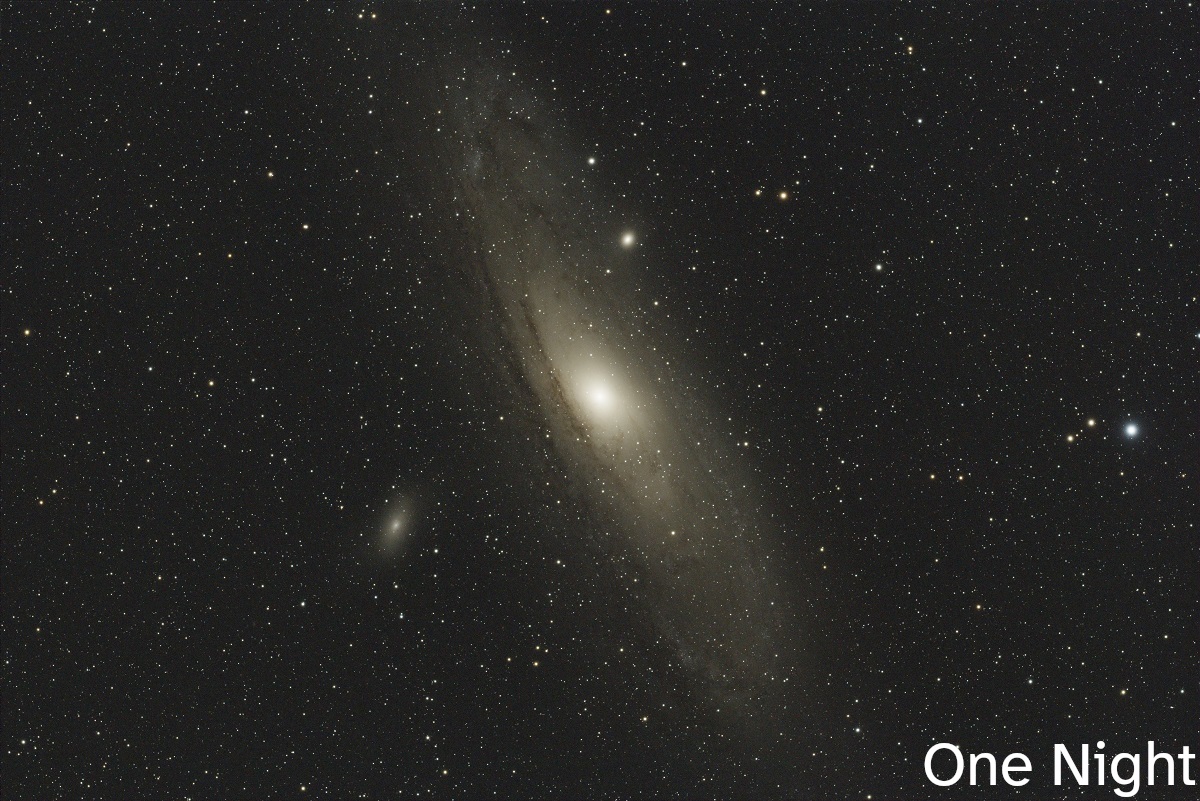
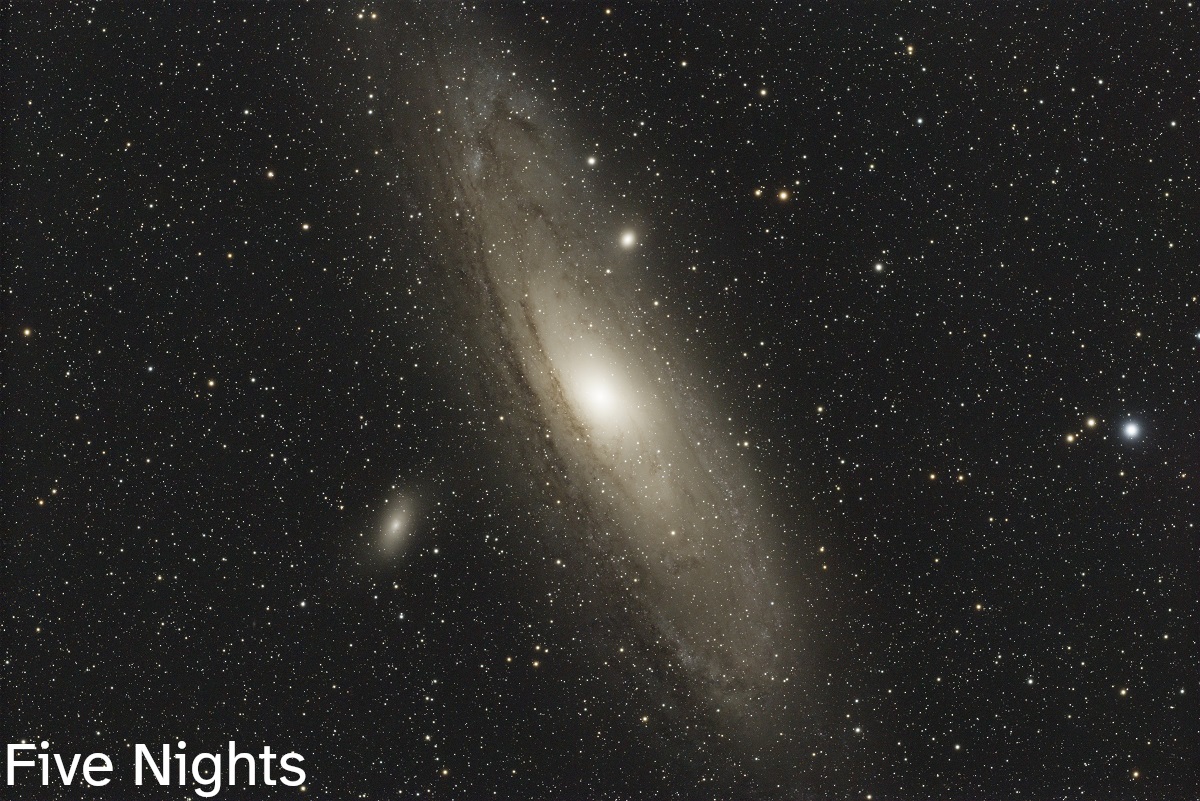
This is my attempt at isolating one variable and directly comparing results. The only difference (hopefully) here is imaging time. Also, I’m really proud to share the first images from my new camera!
| Photo Notes | Left | Right |
|---|---|---|
| Gain | 111 | 111 |
| Exposure | 30s | 30s |
| # of Frames | 93 | 821 |
| Filter | SVBONY UV/IR Cut | SVBONY UV/IR Cut |
| Processing | PixInsight | PixInsight |
| Processing Time1 | 10 min | 1 hr 25 min |
Astrophotography is all about signal-to-noise: the light coming from fantastically faraway galaxies is faint; Seattle light pollution and my camera sensor noise are very strong. The best way to deal with this is to increase imaging time, but I didn’t really know what that meant. Hence this experiment!
I processed the images using the exact same settings, so although the final images aren’t completely polished, they should clearly illustrate the difference additional observation time makes.
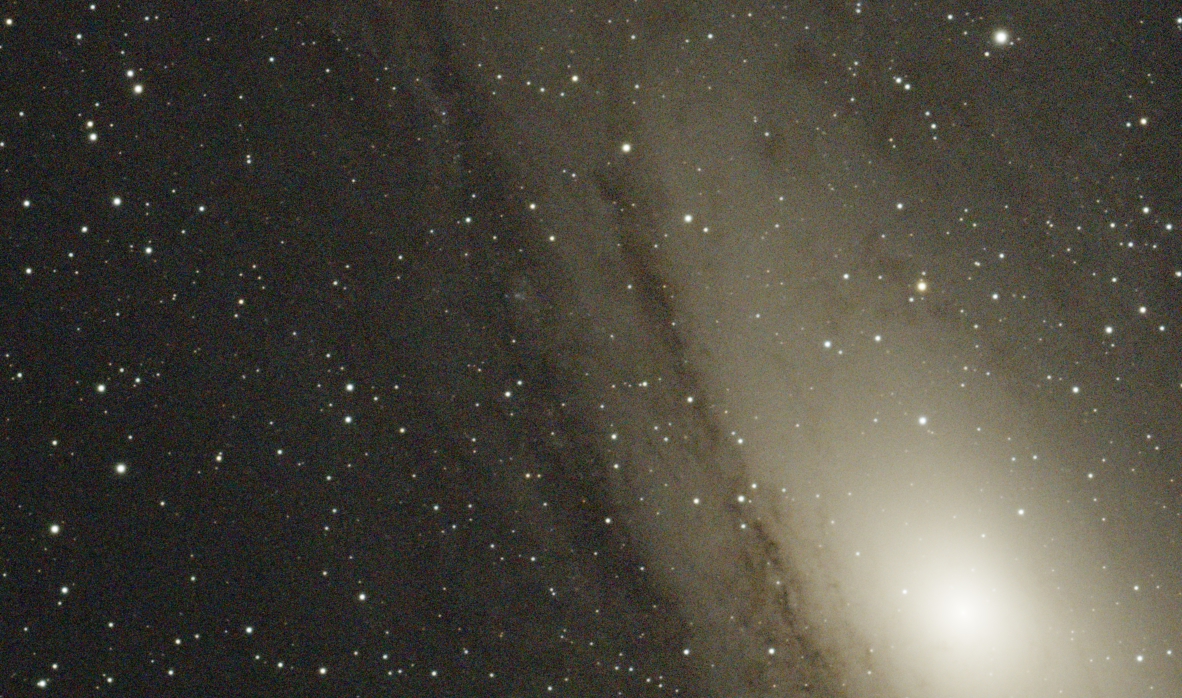
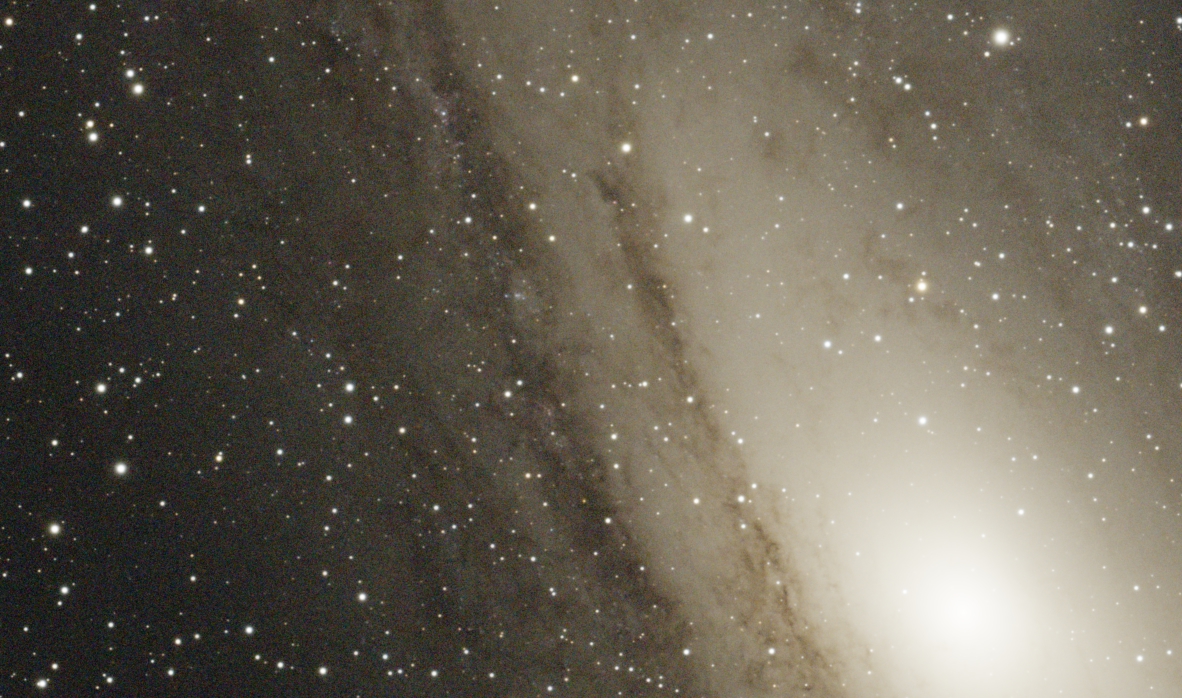
My takeaway from this: there are obvious gains to be had from more time under the stars. However, I need to spend some time learning how to process the data so the resulting image isn’t “blown out”–I want to somehow preserve the detail of the bright parts of the image while reducing noise in the faint areas. I’m pretty sure that’s possible, but please let me know if you have hints!
-
This is on a Core i7-12700k desktop with 32 GB DDR4 and an Intel Arc B580 running Fedora 43. It was chewing on 35.8 GB of pictures! ↩︎